
Ochiltree Court Records After Arrest
After an Ochiltree County jail arrest, the first public facts may appear on the sheriff-linked roster as booking charges, status, bond, arrest date, and arresting agency. That is not the same as the court record. The court record begins to matter when the prosecutor reviews the arrest and formal charges are filed or presented through the court process. District Attorney Jose N. Meraz is the listed local prosecutor, but court-record copy and lookup routing runs through the clerks.
Felony court records are routed to the Ochiltree County District Clerk. Misdemeanor court records are routed to the Ochiltree County Clerk. The District Clerk page links to TexasOnlineRecords for online court records. Booking and custody details remain a jail function, so the Ochiltree County jail inmate records page is the better reference for roster fields and jail status.
The court portal screenshot below is from TexasOnlineRecords, the court records portal linked by the District Clerk.
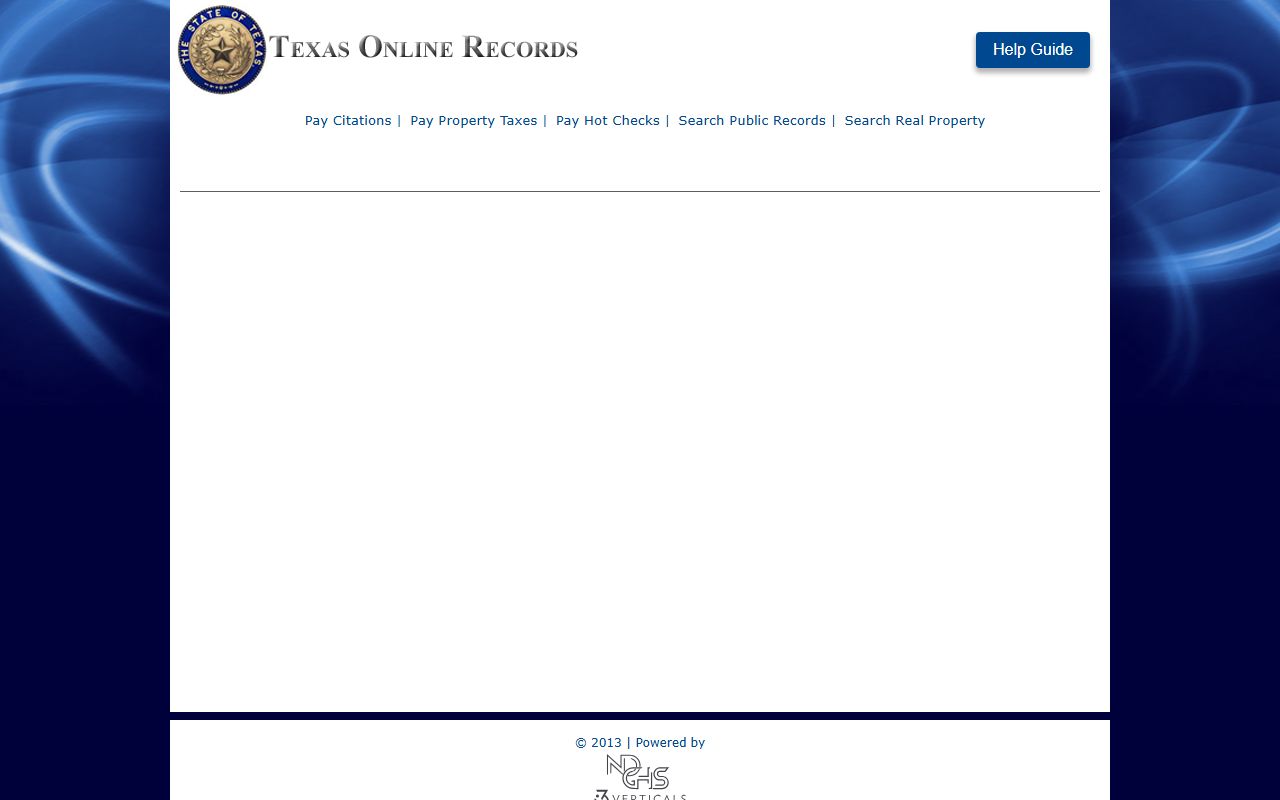
That portal is the online starting point for the court side of an arrest, while the county roster remains the source for current custody and booking-photo details.
Arrest to Ochiltree Court Records
The local pathway runs from arrest to booking, then to magistration, prosecutor review, and court filing. The roster shows arrest charges before the court file is complete. The Justice of the Peace page adds a local detail: remote magistrations take place between 9:00 AM and 5:00 PM daily as needed and may be viewed by the public through Ochiltree Justice of the Peace YouTube Live. Magistration is the first judicial warning and rights or bond appearance, not a final finding of guilt.
- Check the roster for the booking name, arrest date, arresting agency, warrant number, charge description, and bond field.
- Use TexasOnlineRecords or the relevant clerk to look for a filed case after the arrest.
- Separate felony routing from misdemeanor routing. Felony records go to the District Clerk; misdemeanor records go to the County Clerk.
- Read the charge list and status in the court record, not just the jail roster charge row.
- Use the court record for hearings, amendments, dismissals, pleas, convictions, and case disposition.
For booking photos tied to the jail entry, use the Ochiltree County jail mugshots information instead. Court dockets and case files may refer to the same arrest but do not serve as a mugshot gallery.
Ochiltree Court Records Search
The TexasOnlineRecords portal is JavaScript-driven, and the detailed county search fields were not fully exposed in text capture. The visible portal options still help define what the service is and is not. Public records search is the relevant path for court records after a jail arrest; property-tax, citation-payment, and real-property options are separate functions.
| Field or Option | Type | Required | Notes |
|---|---|---|---|
| Search Public Records | Portal link/action | Unspecified | Visible option on the TexasOnlineRecords landing page. |
| Pay Citations | Portal link/action | No | GovRec citation-payment option, not a full criminal case lookup. |
| Search Real Property | Portal link/action | No | Real-property path, not a criminal court search. |
| County selector or case search | Dynamic | Not captured | Detailed fields were not text-accessible in the source capture. |
When the portal does not surface a case, call the right clerk with precise details. The County Clerk page also notes that clerk staff do not conduct broad searches outside what statute authorizes, so a full name, case number, date range, charge, or arrest date can make the request more workable.
Ochiltree Felony and Misdemeanor Records
Ochiltree County uses separate clerk channels for the main criminal-record paths after a jail arrest. Felonies route to the District Clerk. Misdemeanors route to the County Clerk. A person who only has a roster charge description may need to confirm whether the charge was filed as a misdemeanor, felony, or lower court matter before asking for copies.
| Record Type | Office | Contact | Published Hours |
|---|---|---|---|
| Felony court records | District Clerk | 806-435-8054, sbogard@ochiltree.net | Monday-Thursday 8:00 AM-12:00 PM and 1:00 PM-5:00 PM; Friday 8:00 AM-12:30 PM. |
| Misdemeanor court records | County Clerk | 806-435-8039, countyclerk@ochiltree.net | Monday-Thursday 8:00 AM-5:00 PM; Friday 8:00 AM-12:30 PM; open during lunch daily. |
| Charging/prosecution contact | District Attorney | 806-435-8035 | No division schedule was published in the research capture. |
| JP or citation issues | Justice of the Peace | 806-435-8020 | Remote magistration notice: 9:00 AM-5:00 PM daily as needed. |
Charging Documents After Arrest
A jail arrest can start with a complaint or probable-cause basis, but the court record depends on the charging instrument and the court where it is filed. The words on the jail roster may change after prosecutor review. Charges may be added, reduced, amended, dismissed, or presented to a grand jury depending on the case.
| Document | Who Uses It | What It Means |
|---|---|---|
| Complaint | Officer or prosecutor | Initial sworn accusation often used early in a criminal case. |
| Information | Prosecutor | Formal charge used for many misdemeanors and some nonindictment proceedings. |
| Indictment | Grand jury | Felony charging instrument returned by a grand jury. |
Note: A roster charge is an arrest or booking entry; the court record confirms what was filed and what happened later.
Ochiltree Charge Status Terms
Charge status tells where the case stands. A pending charge has not reached final disposition. An amended or reduced charge means the case changed after filing. A dismissal means that charge ended without a conviction. A conviction means guilt was established by plea, verdict, or qualifying judgment. The exact status should be read from the court record rather than assumed from a jail booking line.
| Status | What It Means |
|---|---|
| Pending | The case or charge is open and not finally disposed. |
| Amended | The prosecutor or court changed the charge language, statute, or count. |
| Reduced | The filed charge moved to a lower level or lesser offense. |
| Dismissed | The charge ended without a conviction on that count. |
| Convicted | A plea or finding of guilt produced a conviction record. |
Bond and Warrants After Arrest
Bond information can appear first on the jail roster, but the court may change bond later. Texas Code of Criminal Procedure Chapter 17 governs bail and personal bonds. Local official pages did not publish a jail bond schedule or accepted payment methods, so call 806-435-8000 before traveling to pay bond. A parole, immigration, federal, or out-of-county hold can also delay release even when local bond is addressed.
| Bond or Hold Type | How It Works |
|---|---|
| Cash bond | Full bond amount paid under Texas practice; local payment methods were not published. |
| Surety bond | Posted through a licensed bail bond company. |
| Personal or PR bond | Release on a written promise and conditions rather than full upfront cash. |
| No bond or not set | Payment alone may not be available until a judge acts or a hold is resolved. |
| Detainer or hold | Another agency notice, parole matter, or immigration issue can prevent release. |
No separate Ochiltree active-warrant search or most-wanted list was located in official sources. The roster has a Warrant# column, and court records may show warrant-related case events, but a person who believes a warrant exists should contact the court or counsel before appearing in person.
Charges, Convictions, Sealed Records
Texas public records can show an arrest, a charge, and a conviction as different events. This distinction is central to court records after a jail arrest. An arrest is custody. A charge is an accusation filed or pursued through the court. A conviction is a final guilt outcome. The same person can have an arrest record without a conviction if charges are dismissed or if the person is acquitted.
| Issue | Charge | Conviction |
|---|---|---|
| Stage | Accusation after arrest or filing | Final guilt result by plea, verdict, or judgment |
| Proof level | Based on probable cause or prosecutor filing | Requires proof beyond a reasonable doubt or valid plea |
| Record meaning | Does not prove guilt | Shows guilt was legally established |
Texas Code of Criminal Procedure Chapter 55A is the formal expunction path for qualifying arrest records. Sealing and expunction are often confused, but they are not the same public-access result.
| Issue | Sealed or Restricted | Expunged |
|---|---|---|
| Public visibility | Hidden or limited for many public searches, depending on order and record type. | Qualifying records are removed or treated as not existing under the order. |
| Legal basis | Depends on the applicable Texas record-restriction rule and court order. | Chapter 55A supplies the expunction framework. |
| Best proof | Certified court order or clerk confirmation. | Certified expunction order and agency compliance. |
Texas Court Records Limits
Texas Government Code Chapter 552 is the Public Information Act, but not every court or law-enforcement record is released in the same way. The county PIA form notes that some information can be redacted or withheld under mandatory or discretionary exceptions. For statewide criminal-history information, Texas Government Code Chapter 411 and the Texas DPS Crime Records channel are separate from local court-file lookup.
Important: Do not use a roster charge or a pending court record as proof of conviction; verify the final disposition with the clerk.